
At a Glance
- EPIRB alerts rescue coordination centers via satellite
- MOB transmitter alerts your own boat and nearby vessels
- EPIRB is programmed and registered with the vessel’s MMSI
- Adhere to the manufacturer’s battery and maintenance intervals
What You Should Look For
EPIRB: The Vessel’s Emergency Beacon
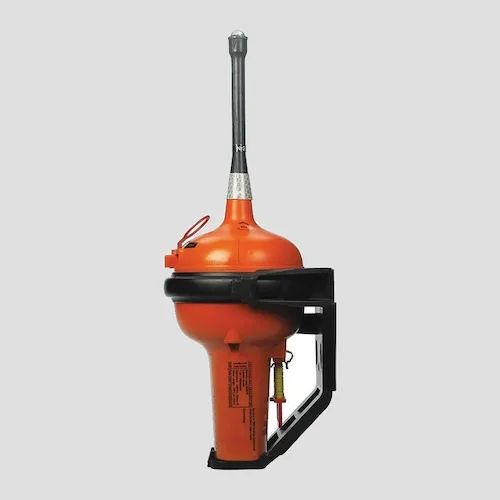
In an emergency, an EPIRB sends a distress call with its position to rescue coordination centers via the COSPAS-SARSAT satellite system. It belongs to the vessel, not the person, and is programmed with the vessel’s MMSI before delivery. It is then registered with the relevant authority of the flag state.
Manual or Automatic Activation
EPIRBs are available with a simple bracket, from which you take the beacon in an emergency and activate it manually, and in a buoyant housing with a hydrostatic release unit that automatically releases the beacon if the vessel sinks. Which version is required or appropriate depends on the vessel and the area of operation.
MOB Systems for the Crew
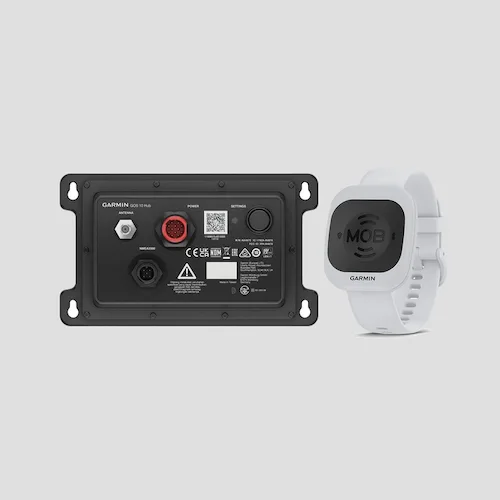
An MOB transmitter is worn on the body or on the life jacket. If someone falls overboard, it alerts the onboard electronics (for example, via radio to a hub that triggers the plotter and alarms) or transmits via AIS and DSC to nearby vessels, depending on the system. This allows the crew to react immediately and return to the marked position.
Compatibility and Maintenance
Before purchasing, check whether an MOB system works with your chartplotter and network (e.g., NMEA 2000). For all devices: perform self-tests regularly and replace batteries and hydrostatic release units according to the manufacturer’s specifications.
Safety in the Shop

Consultation
Unsure what fits your boat?
Tell us about your boat, your existing equipment, or your area of operation – we will check compatibility and equipment before you order.
or via email: info@hycon-nautico.es